


Have A Question?
Off-Grid Solar Installer Geelong
Off-Grid Power in Greater Geelong: Choosing Between Selectronic, Victron, Deye and Sigenergy

Reliable off-grid and backup power, sized to your property
Greater Geelong is one of the fastest-growing regions in Victoria, with the city projected to add approximately 124,000 residents by 2041 and the Surf Coast a further 13,000 by 2036. Powercor has committed $110 million to new zone substations at Gheringhap and Torquay to support that growth. However, network expansion is concentrated close to town. Many properties across the Bellarine hinterland, the Surf Coast hinterland, the Otway Ranges and Golden Plains remain well outside practical grid reach, or face connection quotes running into the tens of thousands of dollars for poles and spans alone.
For those properties — and for anyone on the Bellarine or Surf Coast who has lost power during a storm or a Total Fire Ban day — an off-grid system is rarely a lifestyle statement. It is usually the more practical option, and over the operating life of the system, frequently the more cost-effective one.
As an off-grid installer working across Greater Geelong, GES Energy designs and installs stand-alone power systems to
AS/NZS 4509 (Stand-alone power systems), built around four inverter and battery platforms:
Selectronic, Victron, Deye and Sigenergy. Each suits a different property profile, load type and budget. This guide sets out how we help customers across the region choose between them, including the technical specifications that matter at the switchboard and in the field.
Why off-grid makes sense around Geelong
A few situations come up consistently in this region:
- New builds beyond the existing network — out toward Barrabool, Wallington, Modewarre and into the Otways — where extending mains power can cost tens of thousands of dollars before a single panel is installed
- Bushfire and storm-prone pockets around Anglesea, Aireys Inlet and the Otway Ranges, where outages on Total Fire Ban days or during major storms can run from hours to days
- Farms, sheds and workshops across the Bellarine and Golden Plains where mains power was never extended to a second structure
- Holiday homes and weekenders along the Surf Coast, where low year-round usage makes a stand-alone system more cost-effective than a new grid connection
The four platforms we install, and where each one fits
Selectronic SP PRO — reliability above everything else
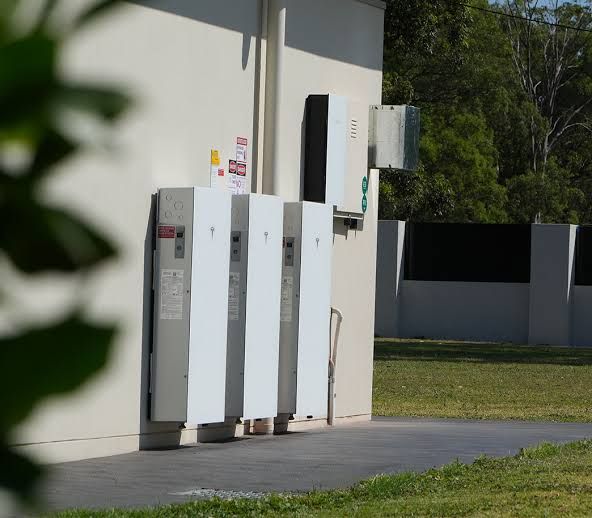
Selectronic is Australian-designed and manufactured, built around a transformer-based topology rather than lighter transformerless electronics. That construction suits remote or mission-critical properties — a bore pump on an Otways hinterland farm, for example, where there is no realistic fallback if an inverter fails.
Technical specifications (SP PRO Series 2i):
| Parameter | Specification |
|---|---|
| Continuous load capacity (single unit) | 3 kW to 20 kW |
| Expandable capacity (Powerchain, three-phase) | Up to 240 kW continuous, 480 kW peak |
| Configuration | Single-phase (up to 4 units), split-phase (up to 8), three-phase (up to 12, 4 per phase) |
| AC transfer switch | 63 A, with anti-chatter protection |
| Battery charging | Five-stage, dual float points, adjustable temperature compensation |
| Battery chemistry support | Configurable set points for lead-acid and lithium chemistries |
| Monitoring | Battery mid-point monitoring with automatic equalisation |
| Warranty | 5 years international standard; 5–10 years for Australia and New Zealand (conditions apply) |
Its AC-coupled architecture keeps the system simple to design and maintain; the trade-off is less flexibility to reconfigure or progressively expand compared with a fully modular system.
Victron MultiPlus-II — flexibility and visibility
Victron's modular ecosystem — separate inverter/chargers, MPPT charge controllers and GX monitoring devices — suits owners who want full visibility of what their system is doing, want to start smaller and expand later, or already run other Victron equipment. It has a long track record in off-grid installs, and rewards careful design with strong long-term firmware support and monitoring depth.
Technical specifications (MultiPlus-II 48/5000/70-50, representative single-phase model):
| Parameter | Specification |
|---|---|
| Continuous output power (25°C) | 5,000 VA / 4,000 W |
| Continuous output power (40°C / 65°C, derated) | 3,700 W / 3,000 W |
| Peak (surge) power | 9,000 W |
| DC input voltage range | 38–66 V (48 V nominal) |
| Battery charger, max current | 70 A |
| AC transfer switch | 50 A |
| Output voltage / frequency | 230 VAC ± 2% / 50 Hz ± 0.1% |
| Maximum efficiency | 96% |
| Protection rating | IP21 |
| Dimensions (H x W x D) | 565 x 320 x 149 mm |
| Weight | 30 kg |
A Victron system is only as good as its commissioning — the modularity that gives it flexibility also means correct configuration of PowerControl, PowerAssist and battery charge parameters is critical to reliable performance.
Deye hybrid inverters — genuine capability at a lower entry cost
Deye's hybrid inverters combine MPPT charging, inversion and battery charging in a single unit, available in single- and three-phase configurations from 3 kW through to 16 kW per unit, with parallel operation for larger systems. They are a strong option for sheds, workshops and farm outbuildings running motor loads — bore pumps, welders, compressors — where the starting current a motor draws matters more than the continuous wattage printed on the box.
Technical specifications (SUN-3 to 6.6K off-grid series and SUN-12/14/16K hybrid series):
| Parameter | Specification |
|---|---|
| Rated output range | 3 kW to 16 kW per unit |
| Peak output | Up to 200% of rated output for 10 seconds |
| Transfer time (grid to battery) | 4 ms |
| Max charge/discharge current (3–6.6 kW models) | Up to 140 A |
| Max charge/discharge current (12–16 kW models) | Up to 290 A |
| Maximum efficiency | Up to 97.6% |
| Euro efficiency | 96.5% |
| Parallel operation | Up to 16 units, single- or three-phase |
| Protection rating | IP65 |
| Noise | Under 46 dB |
| Battery compatibility | Lead-acid or lithium-ion, auto-adapting to BMS |
| Standards compliance | AS/NZS 4777.2, integrated anti-islanding and surge protection |
For many Geelong-region customers, Deye represents the most accessible entry point into a properly engineered off-grid system, rather than a cut-price compromise.
Sigenergy SigenStor — an all-in-one whole-home system
Sigenergy's SigenStor integrates inverter, battery management, storage, energy management and optional DC EV charging into a single modular enclosure. It suits a standard home or holiday house on the Bellarine or Surf Coast that wants one clean, expandable unit rather than several separate boxes — particularly where EV charging is part of the plan.
| Parameter | Specification |
|---|---|
| Battery module capacity (per module) | 5 kWh, 6 kWh, 8 kWh or 9 kWh |
| Maximum capacity, single unit | Up to 54 kWh |
| Maximum capacity, parallel installation | Several hundred kWh (residential/commercial) |
| C&I configuration output | Up to 250 kW, 480 kWh (multiple units) |
| Load-side switching | 0 ms transition on grid loss and restoration |
| Battery protection layers | Temperature sensors, internal fire suppression, decompression valve, aerogel insulation, high-temperature-resistant insulation |
| EV charging | Integrated DC charging module, bidirectional (V2H/V2G capable) |
| Protection rating | IP66 |
| Monitoring | mySigen app, AI-assisted diagnostics |
Sigenergy has become one of the most widely deployed battery platforms in the Australian residential and small commercial market, which supports strong parts availability and installer familiarity — a practical consideration for servicing in a regional area.
Sizing it properly, not guessing
Every off-grid system we design starts with the same inputs, in line with AS/NZS 4509:
- Actual daily load in kWh (measured, not estimated)
- Local sun hours for the Geelong region
- Number of consecutive overcast days the battery bank needs to cover
- Safe depth of discharge for the battery chemistry selected
That combination is what separates a system that shrugs off a run of grey days in July from one that has the owner running a generator every second night.
As a general guide, off-grid systems across the region tend to fall into four bands:
- 3–5 kW for sheds, workshops and lodges
- 6–10 kW for holiday homes and weekenders
- 18–32 kW for standard homes and farms
- 40 kWh+ of storage for agricultural sites, clinics and other commercial premises
Servicing all of Greater Geelong
GES Energy installs off-grid solar and battery systems across Geelong, the Bellarine Peninsula (Ocean Grove, Barwon Heads, Portarlington, Drysdale), the Surf Coast (Torquay, Anglesea, Aireys Inlet, Lorne), Golden Plains, the Otway Ranges and the Colac district.
Talk to GES Energy about your property
Whether you're building beyond the grid, tired of losing power in a storm, or want to compare Selectronic, Victron, Deye and Sigenergy properly against your site's specific load and location, GES Energy's accredited installers can size and quote the right system rather than a one-size-fits-all package.
Get a Free Sigenergy Quote, Anywhere in Victoria
1300 811 031 · info@gesenergy.com.au
GES Energy can assess your home or business, size the right SigenStor configuration, and walk you through exactly what rebates apply to your postcode. Call 0479 069 324 or email info@gesenergy.com.au to book a free site assessment. T&Cs apply — pricing indicative, subject to site assessment and rebate eligibility at time of installation.
GES Energy can assess your home or business, size the right SigenStor configuration, and walk you through exactly what rebates apply to your postcode. Call 0479 069 324 or email info@gesenergy.com.au to book a free site assessment. T&Cs apply — pricing indicative, subject to site assessment and rebate eligibility at time of installation.
Browse by Categories

In 2026, a NSW business can combine up to three government incentives on one solar and battery project: the federal solar discount, the federal battery discount and the new NSW business battery discount that started on 1 September 2026. Together they can cover a large share of the project cost, but only when the job is done by the right kind of installer. Commercial solar and battery incentives at a glance A NSW business can stack federal and NSW incentives on the same project. Each is claimed through your installer as a discount on the quote.

TL;DR: Solar power provides a financial return through utility savings that typically recover the $5,000 to $15,000 installation cost within four to six years. Queensland households achieve the fastest financial recovery with a payback period of 3–5 years. Investment is not recommended for renters or properties with heavy roof shading and south-facing orientations. Homeowners should prioritize north-facing arrays to capture peak generation and maximize property equity appreciation. The state-by-state payback table in this article shows how sunlight variance affects regional ROI. Installing solar panels reduces electricity bills (utility cost reduction) for your property. Most Australian households recover their investment within four to six years through reduced utility costs and rebates (financial incentives). Achieving energy independence is easier with the help of our trusted specialists, who design efficient system setups. The decision arc is simple: match the setup to your site, confirm the bill and value gains stack up for your usage, then install only if shading, tenure and payback still favour solar. Table of contents The ideal solar setup depends on your home situation Daytime generation cuts electricity bills and shortens payback Solar panels can increase home value Match hardware and installers to your real consumption When solar power might not work for you Frequently asked questions Realising the Advantages of Solar Power in 2026 The ideal solar setup depends on your home situation Your ideal system design hinges entirely on your property location and access to the main power grid. Typical situations guide the first choice: a suburban home on a stable grid usually fits an on-grid array sized for daytime loads and feed-in tariffs; a regional property with frequent outages gains more from grid-tied panels plus battery storage on critical circuits; an isolated rural site without reliable grid access is better served by a full off-grid design with specialized solar batteries (energy storage systems). With clients we see that urban homeowners prefer grid-tied systems, while rural properties benefit from full off-grid independence. Grid connections are often unreliable or non-existent in remote regional areas across Australia. Selecting the right setup ensures continuous power for your specific location. On-grid configurations allow suburban homes to achieve lower electricity bills through feed-in tariffs. Conversely, an Off-Grid Solar System Australia suits isolated properties by providing complete energy independence using specialized solar batteries. An off-grid system functions as a personal power utility that operates entirely on your terms. Choosing the wrong configuration limits your long-term energy security. Standard grid-tied setups shut down during neighborhood blackouts to protect linesmen. Adding battery storage keeps your critical circuits running continuously during local outages. SAA-accredited installers assess your daily usage profile to match array capacity with your property layout. Request a personalized quote from GES Energy to evaluate your roof structure before installing solar (photovoltaic system deployment). GES Energy designs tailored setups that support your long-term return. Daytime generation cuts electricity bills and shortens payback Installing solar cuts utility expenses by producing free daytime power directly from your roof. Your final payback duration depends heavily on panel tilt, shading, and regional exposure. Orientation creates measurable variations. North-facing arrays capture peak generation, whereas east-west layouts spread output across the day. Based on market sampling data, system installation costs typically fall into a regional market price band of $5,000-$15,000 (median $8,000). According to research published in NCBI PMC 2012 , solar radiation levels directly dictate total output energy, making local sunlight variance a core factor in yield calculations. To optimize system ROI, work with a trusted solar EPC. High-efficiency panels outperform cheaper, low-yield hardware on breakeven speed because stronger generation shortens the recovery window. Our team delivers tailored Engineering through our Solar Power EPC Services so your system performs reliably. Australian State Sunlight Variance Payback Period Queensland High 3–5 Years New South Wales Moderate 4–6 Years Victoria Variable 5–7 Years Lower electricity bills protect your household against rising energy tariffs. Solar power acts as a prepaid hedge against unpredictable retail utility rate hikes, giving you firmer control over long-term energy independence. Real homeowner results show the value of a professionally engineered solar installation. Among GES Energy's Google reviews, Mustafizur (5★) wrote: "I recommend Greentech Engineering Solutions for residential solar panel installation. They are professional and effective in recommending and providing the most suitable solution based on requirements." Proper requirement analysis supports optimized system performance and stronger household savings. Tip: Check local market pricing bands ($5,000–$15,000) so you do not overpay for residential capacity. Solar panels can increase home value Installing solar panels boosts property equity appreciation because buyers actively seek energy-efficient properties with lower running costs. Modern buyers appreciate existing system infrastructure that promises immediate utility cost reduction. System transferability simplifies settlement negotiations when selling a modern home. Documented installation records that show component warranties add measurable confidence for prospective real estate buyers. Working with Solar Installation Specialists ensures proper system sizing. Clean energy adds real equity. SAA-accredited installers complete the work correctly to protect structural integrity. A high-quality photovoltaic system deployment serves as a strong selling point: a lasting upgrade that returns value through daily generation rather than sitting idle. Property equity appreciation grows when energy systems reduce grid reliance. Choosing a system with reliable solar batteries adds further market value for buyers seeking true energy independence. Reach out to plan a system sized for your roof and sale timeline. Match hardware and installers to your real consumption You need to evaluate your actual energy usage and choose accredited installers to set up a system that matches your consumption patterns. From our client work, we see that rushing into a purchase without analyzing baseline load leads to undersized arrays. Choosing hardware based on technical compatibility prevents system failures over time. Treat roof space as limited real estate: each square meter should earn its place through output that supports lower electricity bills. Here is the step-by-step process: Assess energy needs : Review past utility bills to calculate daily kilowatt-hour usage. Select quality hardware : Choose durable panels, inverters, and solar batteries built for harsh conditions. Hire SAA-accredited installers : Work with certified technicians who ensure compliance with Australian standards. Complete utility connection : Secure grid connection approvals through your distributor before final activation. For commercial properties, custom Engineering from trusted specialists supports long-term system reliability. You can explore tailored commercial systems with Industrial & Commercial Solar Australia to secure grid stability. Installing solar needs a precise balance of array size, inverter capacity and load profile so you avoid output loss during peak hours. Higher capacity equipment often lifts home value (property equity appreciation) while expanding carbon emissions (carbon footprint mitigation) offsets. Check local government programs for available rebates. If you want a personalized quote for your property, get in touch with SAA-accredited experts at GES Energy. When solar power might not work for you Installing solar does not suit every home due to roof shading, poor orientation, high upfront costs, or low grid feed-in tariffs. From client work we see that heavily shaded roofs drastically reduce system energy generation. Shadows from nearby trees or structures block sunlight, which limits panel output throughout the day. Renting a property also makes system installation impractical. Tenants usually cannot alter roof structures or claim long-term lower electricity bills. In those situations, portable units offer an alternative. System performance depends on geography and weather. According to the Wikipedia Solar Power (2025) entry, solar energy availability varies by location, time of day, and season. Solar panels generate no electricity at night and reduced energy during cloudy conditions. [ Sunlight ] │ ┌───────┴───────┐ ▼ ▼ [ Roof Shading ] [ Night / Clouds ] │ │ └───────┬───────┘ ▼ [ Reduced Generation ] Without solar batteries, night-time energy must come directly from the main power grid. Heavy evening power consumers without storage will see smaller power bill savings. System costs increase if your switchboard needs major electrical upgrades before connection. High installation expenses combined with lower feed-in tariffs extend your financial payback period. Choosing grid power remains the practical path if your roof faces south with heavy shading. For unshaded north-facing roofs, solar remains a sound investment. GES Energy provides expert advice to assess your site carefully. Ask the SAA-accredited team for a personalized site review before you commit. Frequently asked questions How does solar power reduce electricity bills? Solar systems lower electricity bills by generating clean energy directly from sunlight for your household needs. This immediate generation reduces grid reliance during peak daylight hours. Adding solar batteries lets you store surplus electricity for night use. A personalized quote can show the financial return for your usage profile. Can solar panels increase home value? Installing solar boosts home value by upgrading your energy infrastructure. Buyers across Australia active markets seek houses featuring pre-installed renewable hardware. Lower ongoing operating expenses make these properties far more attractive. Dedicated specialists keep each build aligned with the required standards. How much maintenance does a solar system need? A standard system requires minimal maintenance, needing only occasional cleaning and regular safety checks. Rain handles most dust clearance on tilted panels naturally. SAA-accredited installers perform periodic system inspections to verify panel output and wiring integrity. Component checks help protect your ongoing energy independence. What applications can solar energy be used for? You can harness solar energy for residential power, water heating, EV charging, and commercial applications. Off-grid systems supply remote properties, while VPP setups share excess capacity back to local networks. A plug-and-play solar generator provides mobile backup for outdoor gear or emergencies. That range reflects the practical advantages of solar power across home and work use. Are you ready to compare solar quotes? Requesting custom proposals helps you compare tailored designs for your specific household consumption. The final investment depends entirely on panel selection, roof layout, and battery capacity choices. Contact SAA-accredited experts at GES Energy for an accurate system proposal. The solar EPC team provides complete support throughout Australia. Realising the Advantages of Solar Power in 2026 Switching to solar energy delivers long-term lower electricity bills and protects your Australian property against rising grid energy expenses. The same questions that opened this guide still apply: does your site suit on-grid, hybrid or off-grid design, do bill savings and equity gains clear the payback band for your state, and do shading, tenure or switchboard limits rule solar out? By installing solar, you build direct energy independence while increasing your overall home value. Adding modern solar batteries keeps your home powered through local grid outages. Available government rebates also cut your upfront system setup expenses. Ready to lower your household emissions? Contact the Engineering team at GES Energy for a tailored quote and complete roof evaluation.

In August 2026, electric vehicle sales officially overtook petrol car sales in Australia for the first time. This milestone confirms that the transition to electric mobility is no longer a future concept; it's our current reality. For many businesses and homeowners, the process of installing a reliable ev car charging station remains a complex challenge. You might feel uncertain about the latest AS/NZS standards or worry that your existing switchboard can't handle the additional load required for high speed charging. It's natural to seek clarity when navigating new building standards like MBS 013 or trying to ensure your infrastructure is ready for upcoming vehicle models. This article provides a thorough procurement and engineering checklist to help you deploy a compliant and reliable system. We'll examine site assessments, safety regulations, and the practicalities of integrating chargers with your existing solar or battery systems to ensure long term energy independence. Key Takeaways Understand how to treat your ev car charging station as a high-value energy asset that integrates with your building's power profile. Learn why a professional maximum demand assessment is essential to identify switchboard bottlenecks before you start procurement. Identify the functional differences between Level 2 AC charging for long-stay parking and Level 3 DC fast charging for fleet or logistics hubs. Follow a structured installation checklist that covers everything from Wi-Fi connectivity and physical space to regulatory compliance with NCC 2025. Discover the long term reliability and cost savings achieved by matching your EV infrastructure with solar and battery systems. Table of Contents The State of EV Car Charging Station Infrastructure in 2026 Technical Requirements: Assessing Your Site Capacity Comparing Level 2 and Level 3 Charging for Commercial Use The Ultimate EV Car Charging Station Installation Checklist Integrating EV Infrastructure with GES Energy EPC Services The State of EV Car Charging Station Infrastructure in 2026 By mid-2026, the Australian automotive landscape reached a historic turning point. Electric vehicles now account for over 23% of new car sales, reflecting a rapid shift that has transformed the humble ev car charging station into a critical piece of national infrastructure. For property owners and facility managers, this means a charger is no longer just a wall-mounted socket; it is a sophisticated energy asset. Modern systems must be integrated into the building's overall load profile to ensure reliability and cost efficiency. The market has moved decisively toward high-speed capabilities. While early adopters relied on basic plug-in leads, 2026 standards prioritise high-speed AC units and DC fast-charging systems. This shift is driven by the need to manage the national grid load as thousands of vehicles connect simultaneously. Set and forget installations are no longer viable because they risk overloading local circuits during peak periods. Instead, smart charging technology now actively balances demand, allowing your facility to support multiple vehicles without requiring expensive transformer upgrades. Effective EV charging station infrastructure requires a holistic design approach. By treating charging points as part of a managed energy ecosystem, businesses can maintain stability while providing a necessary service to a growing demographic of EV drivers. The Evolution of Australian Charging Standards Compliance is the foundation of any safe installation. All work must adhere to the AS/NZS 3000:2018 Wiring Rules, alongside the mandatory Ministerial Building Standard MBS 013, which was published in June 2026. These regulations dictate specific safety measures, including the mandatory use of Type B Residual Current Devices (RCDs) to protect against DC leakage. Additionally, the industry has standardised the Type 2 Mennekes universal socket. This ensures that your infrastructure remains compatible with the diverse range of vehicle models entering the Australian market this year. Why Businesses are Leading the Charge Commercial entities are currently the primary drivers of infrastructure growth. Many organisations are working toward 100% electric corporate fleets by 2030, making on-site charging a logistical necessity rather than a luxury. Providing these facilities also serves as a powerful tool for employee retention and customer attraction. Destination charging refers to the strategic provision of EV power at locations where drivers naturally spend several hours, such as retail centres, allowing for convenient battery replenishment during a standard visit. By installing these systems, you transform your car park into a destination that supports the sustainability goals of your staff and clients alike. Technical Requirements: Assessing Your Site Capacity The success of any ev car charging station deployment relies on the electrical capacity of your premises. Before selecting hardware, you must conduct a professional maximum demand assessment. This engineering audit identifies whether your existing commercial switchboard and sub-mains can sustain the high current draw required for rapid charging. Many older Australian buildings have limited spare capacity; adding even a few chargers without a proper audit can lead to nuisance tripping or equipment failure. In 2026, smart charging software has become the standard for managing these risks. These systems use real-time data to monitor the building’s total load, automatically throttling charging speeds when other heavy machinery or air conditioning units are active. This prevents the main circuit breaker from tripping while ensuring every vehicle receives the maximum possible charge during off-peak windows. When planning your site, we recommend future-proofing for at least two to four times your current requirements. Installing additional conduit and capacity now is far more cost-effective than digging up a car park again in three years. Load Management and Dynamic Balancing Static load management assigns a fixed amount of power to each charger, which is often inefficient. Dynamic load management is superior because it shares a limited power supply across multiple chargers based on real-time vehicle demand. This is particularly useful when Comparing Level 2 and Level 3 Charging options for your fleet. High-quality installations use the Open Charge Point Protocol (OCPP), which ensures your hardware remains compatible with various vendor-neutral software platforms. This flexibility protects your investment from being locked into a single provider’s ecosystem. Upgrading the Main Switchboard (MSB) If your MSB is over 20 years old or already operating near its limit, a significant upgrade is likely necessary. This process involves coordinating with your local Distribution Network Service Provider (DNSP) to increase the site’s total power allocation. While these upgrades can be expensive, they offer long-term reliability. Alternatively, you might consider installing C&I energy storage systems to buffer peak demand. This approach can often be cheaper than a full grid upgrade while increasing your energy independence. For a detailed site audit, you can consult with our engineering team to determine the most viable path forward. Comparing Level 2 and Level 3 Charging for Commercial Use Choosing the right charging speed is a strategic decision that affects both your initial capital expenditure (CAPEX) and your ongoing operational costs (OPEX). While it's tempting to install the fastest hardware available, most Australian businesses find that a balanced approach provides the best return on investment. In 2026, the distinction between AC and DC charging has become clearer, with each serving a specific role within a commercial energy ecosystem. Selecting the wrong hardware can lead to unnecessary grid upgrade costs or, conversely, insufficient charging speeds for your operational needs. Level 2 AC Charging: The Strategic Choice Level 2 AC units are the backbone of workplace and residential infrastructure. These chargers typically offer outputs between 7kW and 22kW. The 22kW output has emerged as the "sweet spot" for modern Australian commercial solar installations. This power level aligns well with the typical daytime generation of a commercial solar array, allowing you to charge vehicles using clean, self-generated energy. Because AC chargers are simpler to install and require less maintenance than their DC counterparts, they're the logical choice for fleet vehicles that remain parked overnight or employees who stay for the full workday. The installed cost for a commercial Level 2 port generally ranges from $3,000 to $12,000, making it a scalable solution for large car parks. Level 3 DC Fast Charging: When Speed is Critical Level 3 DC fast charging is essential when rapid vehicle turnover is the priority. These units range from 50kW to ultra-fast 350kW systems. However, the infrastructure requirements are substantial. High-powered DC stations often necessitate dedicated transformers and specialised liquid cooling systems to manage heat during rapid energy transfer. This makes them ideal for logistics hubs, courier fleets, or retail centres where drivers only stop for short periods. For a deeper look at planning these high-demand sites, consult this EV charging station procurement and installation guide to understand the full scope of grid requirements and site planning. The financial gap between these technologies is significant. A single Level 3 ev car charging station can cost between $80,000 and $250,000 per unit depending on the required site works. Beyond the initial purchase, the OPEX for DC charging is higher due to peak demand charges from utility providers. For businesses managing a standard fleet, prioritising Level 2 infrastructure ensures that vehicles are ready each morning without the massive grid impact associated with DC rapid charging. This strategy prioritises cost savings and energy independence while maintaining high operational reliability. The Ultimate EV Car Charging Station Installation Checklist Deploying a reliable ev car charging station requires more than just mounting hardware to a wall. It is a multi-phase engineering project that demands meticulous planning to ensure long-term safety and performance. By following a structured framework, you can avoid common pitfalls such as signal interference or inadequate physical protection. A methodical approach ensures that your infrastructure remains a stable asset for years to come. Phase 1: Preliminary Site Audit (Power, Wi-Fi, Physical Space). Phase 2: Stakeholder Approval and Regulatory Compliance. Phase 3: Procurement of SAA-Approved Hardware. Phase 4: Professional Installation and Commissioning. Phase 5: Post-Installation Maintenance and Software Monitoring. Step 1: The Site Audit and Power Analysis A successful installation begins with a precise evaluation of the physical environment. You must verify the Wi-Fi or 4G/5G signal strength at the specific charger location. Without a stable data connection, the smart load management and billing features mentioned in previous sections will fail. Measure the physical cable runs from your main switchboard to the proposed parking bays to estimate voltage drop and material costs accurately. You should also assess the need for physical protection. Installing concrete bollards or wheel stops is essential to protect your infrastructure from accidental vehicle impact in busy commercial environments. Step 2: Compliance and Safety Checks Safety is non-negotiable in high-voltage environments. Every piece of hardware you procure must carry the Regulatory Compliance Mark (RCM) to prove it meets Australian safety standards. You should only engage SAA-accredited labour for the installation phase. These specialists understand the unique requirements of EV-specific circuits, such as the mandatory Type B RCDs and the latest MBS 013 building standards. Documenting every stage of the installation is vital for insurance purposes and to maintain your manufacturer warranties over the life of the system. Step 3: Software and Billing Integration Once the physical components are in place, you must focus on the operational layer. Determine how you want to manage access; you might use RFID cards for employees, mobile apps for the public, or integrated credit card terminals for rapid-turnover sites. For maximum efficiency, integrate your charging data with your commercial solar installation monitoring system. This allows you to track exactly how much of your EV power is sourced from your own roof. This data is invaluable for automated reporting on fleet energy consumption and calculating your business's carbon offsets. To ensure your project meets all Australian regulatory and engineering requirements, contact our expert team today for a professional site assessment and procurement plan. Integrating EV Infrastructure with GES Energy EPC Services Selecting an ev car charging station is only the first step in a successful transition to electric mobility. The true value lies in how that station functions within your site's total energy ecosystem. GES Energy provides end-to-end Engineering, Procurement, and Construction (EPC) services to ensure your infrastructure isn't just installed, but optimised for performance and reliability. By matching solar generation profiles to your specific EV charging demand, we help you maximise cost savings and reduce reliance on the grid. The GES Energy EPC Advantage Our team performs custom engineering that considers your entire site energy profile. This includes seamless integration with industrial battery storage solutions to manage peak loads and store excess solar power for use during evening charging windows. We handle the professional project management from the initial Development Application (DA) through to the final commissioning; this allows you to focus on your core business while we manage the technical complexities. Our procurement process focuses on industrial-grade hardware that is built to withstand the harsh Australian climate, ensuring your investment is protected against local environmental factors. Ongoing Maintenance and System Health Reliability is the most critical metric for any charging network. To maintain a target of 99.9% uptime, your ev car charging station requires regular firmware updates and physical inspections. Software glitches or worn cables can lead to downtime that disrupts your fleet operations or frustrates your customers. GES Energy offers scheduled maintenance contracts and rapid repair services to address issues before they lead to system failure. We use SAA-accredited labour for all on-site work, ensuring every repair meets strict safety standards and regulatory requirements. Looking ahead, we help you prepare for a more decentralised energy future. This involves the development of micro-grid solutions that allow your site to operate independently during grid outages. By combining high-capacity charging with industrial batteries, you create a resilient energy hub that is ready for the vehicle models of 2026 and beyond. This long-term vision ensures your infrastructure remains a high-performing asset as technology and vehicle requirements continue to evolve. Future-Proofing Your Commercial Energy Infrastructure The transition to electric mobility in 2026 is no longer a forecast; it's a fundamental shift in how Australian businesses manage energy. Successfully deploying an ev car charging station requires moving beyond simple hardware installation to a holistic engineering strategy. By conducting thorough site audits, ensuring compliance with the latest safety standards, and integrating your chargers with solar and battery systems, you create a resilient asset that delivers long-term cost savings and energy independence. Frequently Asked Questions Do I need a special permit to install an EV car charging station in Australia? You generally don't need a specific "EV permit" for standard commercial installations; however, you must comply with strict national regulations. All work must adhere to the 2025 National Construction Code and the Ministerial Building Standard MBS 013. You are also required to ensure the installation is performed by an SAA-accredited electrician who can certify that the circuit meets AS/NZS 3000 wiring rules for insurance and safety purposes. GES Energy brings national expertise to complex energy projects, including specialised knowledge in utility-scale and micro-grid systems up to 5 MW. Our team of SAA-accredited electrical engineers ensures that your infrastructure meets every regulatory requirement while maintaining 99.9% uptime. Professional oversight is the most effective way to eliminate uncertainty and protect your investment against future technological shifts. Request a professional site audit for your EV infrastructure from GES Energy to begin your transition with confidence. We are ready to help you build a reliable, sustainable future for your facility. Can I use my existing commercial solar panels to charge my EV fleet? Yes, you can integrate your existing solar array with your charging infrastructure to maximise energy independence. By using smart charging software, you can prioritise "solar-only" charging sessions during peak daylight hours. This approach significantly reduces your operational costs and ensures you are using clean, self-generated power rather than drawing expensive electricity from the grid during peak demand periods. What is the average cost of installing a Level 2 commercial charger? The total installed cost for a commercial Level 2 ev car charging station typically ranges from $3,000 to $12,000 per port. These 2026 market figures include hardware procurement and professional labour. The final price depends on the complexity of your site; factors such as the distance from the main switchboard and the need for trenching or switchboard upgrades will influence the total investment required. How much power does an EV charging station actually draw from the grid? A standard Level 2 commercial charger draws between 7kW and 22kW of power depending on the vehicle's capacity and the charger's configuration. If you install Level 3 DC fast chargers, the draw increases dramatically to between 50kW and 350kW per unit. It is essential to perform a maximum demand assessment to ensure your site's grid connection can sustain these loads without causing building-wide power failures. Is it better to have a tethered cable or a universal socket for a public station? Universal sockets are usually the better choice for public or multi-tenant stations because they allow drivers to use their own cables. This setup reduces your ongoing maintenance costs because the cable is the component most likely to suffer from physical damage or wear. Tethered cables are often reserved for private fleet depots where convenience for specific drivers is the primary operational priority. How do I manage billing for different users at my business premises? You can manage user access and billing through software that supports the Open Charge Point Protocol (OCPP). This technology allows you to issue RFID cards to employees or set up mobile app payments for the general public. The software automatically tracks energy consumption per session, allowing you to generate accurate invoices or report on carbon offsets for your corporate sustainability targets. What happens if my building does not have enough power for multiple chargers? If your building has reached its electrical limit, you don't necessarily need a costly grid upgrade. You can implement dynamic load management to balance power between your ev car charging station units and the rest of the building. Alternatively, installing industrial battery storage can provide the necessary "buffer" to support high-speed charging without exceeding your site's total power allocation from the network provider. Are there government rebates available for EV infrastructure in 2026? Several incentives are active in 2026 to support infrastructure growth. The Federal DRIVEN program provides up to $3,000 per charging plug for eligible businesses; this round remains open until April 30, 2027. Additionally, the NSW EV Fleets Incentive offers funding for smart chargers until November 30, 2026. You should verify your eligibility based on your specific state and the scale of your proposed project.