


Have A Question?
NSW Battery Rebates 2026: What You Can Get, Who Qualifies and How to Claim
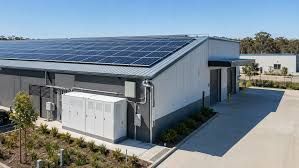
In 2026, a NSW home can cut roughly 30% off a new battery through the federal Cheaper Home Batteries Program, then earn an extra NSW payment by joining a virtual power plant. Businesses now get even more: since 1 September 2026, a new NSW business battery discount can be combined with the federal one.
NSW battery rebates at a glance
There are two main sources of help: the Australian Government's battery discount and the NSW Government's Peak Demand Reduction Scheme. Which ones you can get depends on whether you are a home, an apartment building or a business.
| Incentive | Who provides it | Who it's for | Typical value | Can be combined with the federal discount? |
|---|---|---|---|---|
| Cheaper Home Batteries Program | Australian Government | Homes, businesses and community groups with solar | Around 30% off; about $3,458 on a 13.5 kWh battery | This is the federal discount |
| Virtual power plant (VPP) incentive | NSW Government | Homes and small businesses, battery 2–50 kWh | Up to about $1,100, depending on the VPP provider | Yes |
| Business battery discount | NSW Government | Businesses, battery over 20 kWh | About 20–40% off the battery | Yes, for batteries under 100 kWh |
| Apartment building battery discount | NSW Government | Apartment buildings with 4 or more homes | Set by the certificate provider | Check with your installer |
| Home Energy Saver | NSW Government | Households on eligible incomes | Zero-interest loan up to $15,000; discount up to $4,000 (coming soon) | Check with your installer |
Good to know: the old NSW battery installation rebate for homes has closed. If someone offers a NSW home installation rebate on top of the federal discount, ask them to show you the rule it comes from.
The federal battery discount (Cheaper Home Batteries Program)
The federal discount takes about 30% off the cost of a new battery, and it's the biggest saving for most NSW homes. It started on 1 July 2025 and runs until 2030. The government expanded it to $7.2 billion in December 2025.
How it works. Your battery earns small-scale technology certificates (STCs) based on its usable capacity. Your installer takes the certificates and knocks their value straight off your quote, so you don't need to fill in any forms. Each certificate is currently worth around $38 on the open market (the government's STC Clearing House price is capped at $40).
Why bigger batteries get less per kWh. Since 1 May 2026, the first 14 kWh earns the full rate. The next 14 kWh earns 60%, and capacity from 28 to 50 kWh earns 15%. Anything over 50 kWh earns nothing extra.
Why timing matters. The rate drops every 1 January and 1 July. A battery installed in December 2026 gets noticeably more than the same battery installed in January 2027.
| Usable battery size | Installed by 31 Dec 2026 | Installed Jan–Jun 2027 | You lose by waiting |
|---|---|---|---|
| 10 kWh | $2,584 | $2,166 | $418 |
| 13.5 kWh | $3,458 | $2,888 | $570 |
| 20 kWh | $4,522 | $3,800 | $722 |
| 30 kWh | $5,852 | $4,902 | $950 |
| 40 kWh | $6,232 | $5,206 | $1,026 |
| 50 kWh or more | $6,612 | $5,548 | $1,064 |
Estimates assume $38 per certificate. The final amount depends on the certificate price on the day and the date your installation is certified as electrically compliant. After July 2027 the rate keeps falling each half-year until 2030 (official schedule).
The NSW virtual power plant (VPP) incentive
NSW pays you an extra upfront amount (set by your VPP provider, commonly quoted at up to about $1,100) for signing your battery up to a virtual power plant, and you can add it on top of the federal discount. A VPP links many home batteries together. When the grid is under pressure, usually on hot evenings, your VPP provider can draw a little power from your battery and pay you for it.
What you get
• A one-off NSW incentive, paid upfront, in instalments or as bill credits, depending on your provider. The amount depends on how much battery capacity you make available, up to 28 kWh, and on your contract.
• Ongoing VPP payments for the energy your battery supplies to the grid.
Who qualifies
• Houses, townhouses and small business sites in NSW. Apartment buildings are not eligible.
• A grid-connected battery between 2 kWh and 50 kWh. Solar is no longer required for this incentive (since 1 July 2026).
• No registered life support equipment at the property.
• One claim per electricity meter. If you already claimed it between November 2024 and June 2025, you can't claim again.
• An electricity retailer that supports VPPs. You may need to switch retailers.
Tip: compare several VPP offers. They differ a lot in upfront payment, ongoing earnings and how often the provider can use your battery (NSW VPP incentive).
Batteries for NSW businesses: a new discount from 1 September 2026
NSW businesses can now get about 30–40% off a battery installed with new solar, or about 20–30% off a battery on its own. On top of that, the federal discount still applies to batteries under 100 kWh. It's the biggest change to NSW battery support in 2026.
| Small and medium business | Large commercial and industrial | |
|---|---|---|
| Usable battery size | Over 20 kWh, up to 200 kWh | Over 200 kWh, up to 30 MWh (incentive on the first 10 MWh) |
| Minimum you must pay | $5,000 | No minimum |
| Battery and installer | Clean Energy Council approved battery, installer accredited by Solar Accreditation Australia | Fire-safety tested to UL9540A, licensed installer, remotely controllable for demand response |
| Combine with the federal discount | Yes, for batteries under 100 kWh | No (too large for the federal program) |
| Combine with the NSW VPP incentive | Yes, for batteries up to 50 kWh | No |
How to get the bigger discount: install new solar within 90 days before or after the battery. The new solar must be at least 25% of the battery's capacity, for example 25 kW of new panels with a 100 kWh battery. Businesses that already have solar need to add new panels to qualify for the higher rate.
Rules to know:
• Residential buildings and data centres are excluded, and the site must be grid-connected.
• Each site can use the discount once, and batteries commissioned before 1 September 2026 don't qualify.
• The paperwork must be signed before installation starts, and the job needs planning and network approvals.
The federal program also covers businesses, as long as the battery is 5–100 kWh and paired with solar under 100 kW. Solar panels themselves earn a separate federal discount (for systems under 100 kW), which you can combine with both battery discounts (NSW business battery incentive).
Apartments and lower-income households
Apartment buildings. Since 1 September 2026, NSW has offered a separate discount for shared batteries in apartment buildings with at least four homes. The battery must be 20–200 kWh, installed outdoors, with planning and network approvals in place. The building pays at least $1,000, and this discount can't be combined with the VPP incentive.
Home Energy Saver. This NSW program helps households spread or reduce the cost of solar and batteries:
• Zero-interest loan up to $15,000, repaid over up to 10 years. Open now through Brighte and Plenti for homeowners and landlords with a household income up to $210,000.
• Discount up to $4,000, coming soon, for homeowners and renters with a household income up to $80,000 or an eligible concession card (Health Care Card, Low Income Health Care Card, Pensioner Concession Card or Veteran Gold Card). Renters need their landlord's approval, and a $200 minimum contribution applies.
If you want both, NSW recommends applying for the discount first (Home Energy Saver).
Who can apply: the requirements
Most NSW homes and businesses with solar, or adding solar, qualify for at least one discount, as long as the battery, the installer and the paperwork meet the rules below.
For the federal discount (homes and businesses):
• The battery is 5–100 kWh (nominal capacity) and installed for permanent use. Portable batteries and electric vehicles don't count.
• It's installed with new or existing rooftop solar under 100 kW. A battery charged only from the grid doesn't qualify.
• The battery and inverter are on the Clean Energy Council's approved list.
• The system can join a virtual power plant (you don't have to join one).
• It's installed by an installer accredited by Solar Accreditation Australia, and a licensed electrician does the wiring.
• The property hasn't already had a battery discounted under the program. Adding at least 5 kWh to a battery that was never discounted is allowed.
For the NSW VPP incentive: a house, townhouse or small business with a 2–50 kWh grid-connected battery, a VPP provider offering the incentive, and no previous claim on that meter.
For the NSW business discount: a business site (not residential and not a data centre) installing more than 20 kWh, a first-time claim for that site, all approvals in place, and paperwork signed before work starts.
How to claim, step by step
You don't apply to the government yourself. Your installer claims the certificates and the discounts appear on your quote. Your part is choosing the right system and signing the right forms at the right time.
- Get a few quotes from accredited installers. Each quote should show every discount as its own line, with the certificate numbers behind it.
- Size the battery properly. It should suit your daily usage, your solar and your inverter. Bigger isn't always better, especially above 14 kWh, where the federal rate drops.
- Sign the paperwork before installation: the certificate assignment for the federal discount, and the NSW nomination form for a business or apartment discount. NSW won't reimburse work done before this form is signed.
- Installation and sign-off. An accredited installer fits the system, and an electrician issues the certificate of electrical compliance. That date decides your federal rate.
- Join a VPP (optional). Pick a provider offering the NSW incentive, sign its contract and nomination form, and receive the payment after the cooling-off period.
- Keep your records: quotes, invoices, the compliance certificate and warranty documents.
Common mistakes that cost people their rebate
• Waiting until the new year. The federal rate drops on 1 January 2027. On a 13.5 kWh battery that costs about $570, and on 50 kWh about $1,064.
• Buying a battery with no solar. Without solar there's no federal discount, although the VPP incentive and the business discount still apply.
• Expecting a NSW home installation rebate. It closed to the public. For homes, NSW support now comes through the VPP incentive and Home Energy Saver.
• Using an unlisted battery or an unaccredited installer. Both rule out the discount entirely.
• Signing NSW forms after work starts. Business and apartment discounts need the nomination form signed first.
• Oversizing. Above 14 kWh each extra kWh earns less, and above 50 kWh it earns nothing federally.
Frequently asked questions
Can I get both the federal and NSW battery rebates? Yes, in most cases. Homes can combine the federal discount with the NSW VPP incentive for batteries up to 50 kWh. Businesses can combine the federal discount with the new NSW business discount for batteries under 100 kWh, and add the VPP incentive for batteries up to 50 kWh.
Do I need solar panels to get a battery rebate in NSW? Yes for the federal discount. No for the NSW VPP incentive or the NSW business discount, though businesses get a bigger discount when they add new solar.
How much is the NSW battery rebate for a home in 2026? Most of the saving now comes from the federal discount: about $3,458 on a 13.5 kWh battery installed by 31 December 2026. NSW adds the VPP incentive, often up to about $1,100, if you join a participating VPP.
I rent. Can I get a battery rebate? The federal discount goes to the battery owner, so you'll need your landlord's agreement. Eligible renters will also be able to apply for the Home Energy Saver discount once it opens, with the landlord's approval.
I already have a battery. Can I add to it? Yes, if that battery never received the federal discount, you add at least 5 kWh, and the total stays under 100 kWh.
Is the rebate paid to me? Usually not. It's taken off your quote upfront. VPP incentives are paid by the VPP provider as cash or bill credits.
Get your rebate worked out by GES Energy
GES Energy designs and installs solar and battery systems for NSW homes and businesses. We work out exactly which federal and NSW discounts you qualify for and show each one on your quote. Want your battery installed before the federal rate drops on 1 January 2027? Contact us for a free assessment.
All figures are estimates based on the rules in effect on 2 October 2026. Final amounts depend on certificate prices, your installation date and eligibility checks by the scheme providers.
Sources
• Cheaper Home Batteries Program – DCCEEW
• Cheaper Home Batteries eligibility – DCCEEW
• Install a battery – NSW Climate and Energy Action
• Virtual power plant incentive – NSW Climate and Energy Action
• Batteries for businesses incentive – NSW Climate and Energy Action
Browse by Categories

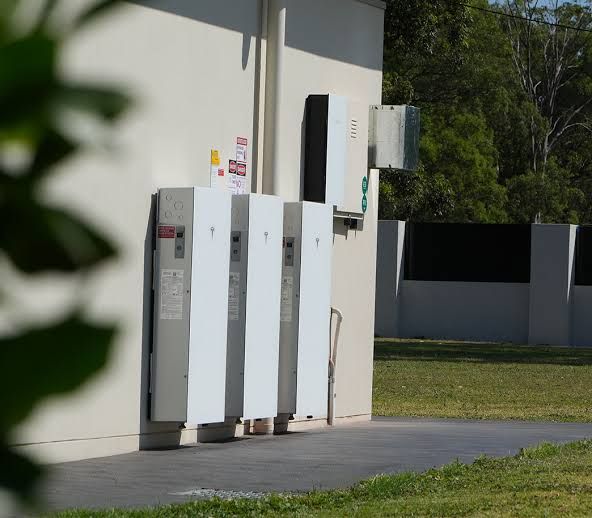
In 2026, a NSW business can combine up to three government incentives on one solar and battery project: the federal solar discount, the federal battery discount and the new NSW business battery discount that started on 1 September 2026. Together they can cover a large share of the project cost, but only when the job is done by the right kind of installer. Commercial solar and battery incentives at a glance A NSW business can stack federal and NSW incentives on the same project. Each is claimed through your installer as a discount on the quote.

Off-Grid Power in Greater Geelong: Choosing Between Selectronic, Victron, Deye and Sigenergy

TL;DR: Solar power provides a financial return through utility savings that typically recover the $5,000 to $15,000 installation cost within four to six years. Queensland households achieve the fastest financial recovery with a payback period of 3–5 years. Investment is not recommended for renters or properties with heavy roof shading and south-facing orientations. Homeowners should prioritize north-facing arrays to capture peak generation and maximize property equity appreciation. The state-by-state payback table in this article shows how sunlight variance affects regional ROI. Installing solar panels reduces electricity bills (utility cost reduction) for your property. Most Australian households recover their investment within four to six years through reduced utility costs and rebates (financial incentives). Achieving energy independence is easier with the help of our trusted specialists, who design efficient system setups. The decision arc is simple: match the setup to your site, confirm the bill and value gains stack up for your usage, then install only if shading, tenure and payback still favour solar. Table of contents The ideal solar setup depends on your home situation Daytime generation cuts electricity bills and shortens payback Solar panels can increase home value Match hardware and installers to your real consumption When solar power might not work for you Frequently asked questions Realising the Advantages of Solar Power in 2026 The ideal solar setup depends on your home situation Your ideal system design hinges entirely on your property location and access to the main power grid. Typical situations guide the first choice: a suburban home on a stable grid usually fits an on-grid array sized for daytime loads and feed-in tariffs; a regional property with frequent outages gains more from grid-tied panels plus battery storage on critical circuits; an isolated rural site without reliable grid access is better served by a full off-grid design with specialized solar batteries (energy storage systems). With clients we see that urban homeowners prefer grid-tied systems, while rural properties benefit from full off-grid independence. Grid connections are often unreliable or non-existent in remote regional areas across Australia. Selecting the right setup ensures continuous power for your specific location. On-grid configurations allow suburban homes to achieve lower electricity bills through feed-in tariffs. Conversely, an Off-Grid Solar System Australia suits isolated properties by providing complete energy independence using specialized solar batteries. An off-grid system functions as a personal power utility that operates entirely on your terms. Choosing the wrong configuration limits your long-term energy security. Standard grid-tied setups shut down during neighborhood blackouts to protect linesmen. Adding battery storage keeps your critical circuits running continuously during local outages. SAA-accredited installers assess your daily usage profile to match array capacity with your property layout. Request a personalized quote from GES Energy to evaluate your roof structure before installing solar (photovoltaic system deployment). GES Energy designs tailored setups that support your long-term return. Daytime generation cuts electricity bills and shortens payback Installing solar cuts utility expenses by producing free daytime power directly from your roof. Your final payback duration depends heavily on panel tilt, shading, and regional exposure. Orientation creates measurable variations. North-facing arrays capture peak generation, whereas east-west layouts spread output across the day. Based on market sampling data, system installation costs typically fall into a regional market price band of $5,000-$15,000 (median $8,000). According to research published in NCBI PMC 2012 , solar radiation levels directly dictate total output energy, making local sunlight variance a core factor in yield calculations. To optimize system ROI, work with a trusted solar EPC. High-efficiency panels outperform cheaper, low-yield hardware on breakeven speed because stronger generation shortens the recovery window. Our team delivers tailored Engineering through our Solar Power EPC Services so your system performs reliably. Australian State Sunlight Variance Payback Period Queensland High 3–5 Years New South Wales Moderate 4–6 Years Victoria Variable 5–7 Years Lower electricity bills protect your household against rising energy tariffs. Solar power acts as a prepaid hedge against unpredictable retail utility rate hikes, giving you firmer control over long-term energy independence. Real homeowner results show the value of a professionally engineered solar installation. Among GES Energy's Google reviews, Mustafizur (5★) wrote: "I recommend Greentech Engineering Solutions for residential solar panel installation. They are professional and effective in recommending and providing the most suitable solution based on requirements." Proper requirement analysis supports optimized system performance and stronger household savings. Tip: Check local market pricing bands ($5,000–$15,000) so you do not overpay for residential capacity. Solar panels can increase home value Installing solar panels boosts property equity appreciation because buyers actively seek energy-efficient properties with lower running costs. Modern buyers appreciate existing system infrastructure that promises immediate utility cost reduction. System transferability simplifies settlement negotiations when selling a modern home. Documented installation records that show component warranties add measurable confidence for prospective real estate buyers. Working with Solar Installation Specialists ensures proper system sizing. Clean energy adds real equity. SAA-accredited installers complete the work correctly to protect structural integrity. A high-quality photovoltaic system deployment serves as a strong selling point: a lasting upgrade that returns value through daily generation rather than sitting idle. Property equity appreciation grows when energy systems reduce grid reliance. Choosing a system with reliable solar batteries adds further market value for buyers seeking true energy independence. Reach out to plan a system sized for your roof and sale timeline. Match hardware and installers to your real consumption You need to evaluate your actual energy usage and choose accredited installers to set up a system that matches your consumption patterns. From our client work, we see that rushing into a purchase without analyzing baseline load leads to undersized arrays. Choosing hardware based on technical compatibility prevents system failures over time. Treat roof space as limited real estate: each square meter should earn its place through output that supports lower electricity bills. Here is the step-by-step process: Assess energy needs : Review past utility bills to calculate daily kilowatt-hour usage. Select quality hardware : Choose durable panels, inverters, and solar batteries built for harsh conditions. Hire SAA-accredited installers : Work with certified technicians who ensure compliance with Australian standards. Complete utility connection : Secure grid connection approvals through your distributor before final activation. For commercial properties, custom Engineering from trusted specialists supports long-term system reliability. You can explore tailored commercial systems with Industrial & Commercial Solar Australia to secure grid stability. Installing solar needs a precise balance of array size, inverter capacity and load profile so you avoid output loss during peak hours. Higher capacity equipment often lifts home value (property equity appreciation) while expanding carbon emissions (carbon footprint mitigation) offsets. Check local government programs for available rebates. If you want a personalized quote for your property, get in touch with SAA-accredited experts at GES Energy. When solar power might not work for you Installing solar does not suit every home due to roof shading, poor orientation, high upfront costs, or low grid feed-in tariffs. From client work we see that heavily shaded roofs drastically reduce system energy generation. Shadows from nearby trees or structures block sunlight, which limits panel output throughout the day. Renting a property also makes system installation impractical. Tenants usually cannot alter roof structures or claim long-term lower electricity bills. In those situations, portable units offer an alternative. System performance depends on geography and weather. According to the Wikipedia Solar Power (2025) entry, solar energy availability varies by location, time of day, and season. Solar panels generate no electricity at night and reduced energy during cloudy conditions. [ Sunlight ] │ ┌───────┴───────┐ ▼ ▼ [ Roof Shading ] [ Night / Clouds ] │ │ └───────┬───────┘ ▼ [ Reduced Generation ] Without solar batteries, night-time energy must come directly from the main power grid. Heavy evening power consumers without storage will see smaller power bill savings. System costs increase if your switchboard needs major electrical upgrades before connection. High installation expenses combined with lower feed-in tariffs extend your financial payback period. Choosing grid power remains the practical path if your roof faces south with heavy shading. For unshaded north-facing roofs, solar remains a sound investment. GES Energy provides expert advice to assess your site carefully. Ask the SAA-accredited team for a personalized site review before you commit. Frequently asked questions How does solar power reduce electricity bills? Solar systems lower electricity bills by generating clean energy directly from sunlight for your household needs. This immediate generation reduces grid reliance during peak daylight hours. Adding solar batteries lets you store surplus electricity for night use. A personalized quote can show the financial return for your usage profile. Can solar panels increase home value? Installing solar boosts home value by upgrading your energy infrastructure. Buyers across Australia active markets seek houses featuring pre-installed renewable hardware. Lower ongoing operating expenses make these properties far more attractive. Dedicated specialists keep each build aligned with the required standards. How much maintenance does a solar system need? A standard system requires minimal maintenance, needing only occasional cleaning and regular safety checks. Rain handles most dust clearance on tilted panels naturally. SAA-accredited installers perform periodic system inspections to verify panel output and wiring integrity. Component checks help protect your ongoing energy independence. What applications can solar energy be used for? You can harness solar energy for residential power, water heating, EV charging, and commercial applications. Off-grid systems supply remote properties, while VPP setups share excess capacity back to local networks. A plug-and-play solar generator provides mobile backup for outdoor gear or emergencies. That range reflects the practical advantages of solar power across home and work use. Are you ready to compare solar quotes? Requesting custom proposals helps you compare tailored designs for your specific household consumption. The final investment depends entirely on panel selection, roof layout, and battery capacity choices. Contact SAA-accredited experts at GES Energy for an accurate system proposal. The solar EPC team provides complete support throughout Australia. Realising the Advantages of Solar Power in 2026 Switching to solar energy delivers long-term lower electricity bills and protects your Australian property against rising grid energy expenses. The same questions that opened this guide still apply: does your site suit on-grid, hybrid or off-grid design, do bill savings and equity gains clear the payback band for your state, and do shading, tenure or switchboard limits rule solar out? By installing solar, you build direct energy independence while increasing your overall home value. Adding modern solar batteries keeps your home powered through local grid outages. Available government rebates also cut your upfront system setup expenses. Ready to lower your household emissions? Contact the Engineering team at GES Energy for a tailored quote and complete roof evaluation.