
Have A Question?
Commercial Solar: 2026 Guide for Australian Businesses

While Australia leads the world in residential solar, the commercial sector has only tapped into a quarter of that capacity, leaving 5.6GW of potential largely untouched. If you're managing an industrial facility, you're likely facing the dual pressure of rising network demand charges and increasing uncertainty regarding grid reliability. You know that a strategic commercial solar installation is no longer just a green initiative; it's a necessary engineering solution to stabilise your operational expenditure.
This guide provides a clear path to navigating the complexities of large-scale procurement and energy security in 2026. We'll break down the current regulatory environment, from the reduced 4-year STC deeming period to the latest remote management requirements for systems in the SWIS. By the end of this article, you'll understand how to manage complex EPC contracts and integrate battery storage to future-proof your facility against a volatile energy market. Our goal is to ensure you move forward with the confidence that your energy transition is handled by capable, expert hands.
Key Takeaways
- Understand how to mitigate volatile energy prices and rising network demand charges through strategic infrastructure investment.
- Learn the critical factors of site evaluation, including structural load capacity and navigating flexible export limits for a commercial solar installation.
- Discover the benefits of the EPC (Engineering, Procurement, and Construction) model for ensuring financial certainty and industrial-grade performance.
- Gain clarity on Australian incentive schemes, including the 2026 thresholds for STCs and the strategic application of LGCs for larger systems.
- Explore how a national partner provides end-to-end accountability, from micro-grid design to long-term maintenance and energy security.
Table of Contents
- Why Commercial Solar Installation is a Strategic Imperative in 2026
- Evaluating Your Site for a Total Energy Ecosystem
- The EPC Advantage: Engineering for Industrial Performance
- Financial Strategies: Incentives, ROI, and Maintenance
- Partnering with GES Energy for National Solar Rollouts
Why Commercial Solar Installation is a Strategic Imperative in 2026
For many Australian firms, the transition to onsite renewables has shifted from a secondary sustainability goal to a primary operational requirement. High wholesale energy prices and unpredictable network demand charges have made traditional grid reliance a significant financial liability. A tailored commercial solar installation allows businesses to regain control over their overheads. It provides a fixed-cost energy source that acts as a hedge against market volatility, ensuring that operational expenditure remains predictable even as external prices fluctuate. This stability is vital for long-term budgeting and maintaining competitive margins in a tightening economy.
Looking toward the end of the decade, the electrification of industrial processes is accelerating. Many companies are now swapping gas-fired boilers for high-efficiency heat pumps and transitioning to electric vehicle (EV) fleets for their logistics and site operations. These changes mean your total electricity demand will likely rise significantly over the next three years. Integrating solar assets now ensures your facility has the infrastructure to support these increased loads without incurring crippling network upgrade costs. It's about building a resilient foundation today for the energy requirements of tomorrow.
Energy Independence and Grid Resilience
Relying solely on the national grid exposes your operations to peak demand spikes and potential load-shedding events. By generating power onsite, you create a "behind-the-meter" asset that reduces the strain on external infrastructure. This independence is critical during extreme weather events or periods of network instability. It ensures that essential machinery and climate control systems remain operational, protecting both your stock and your productivity when the grid is most vulnerable. Strategic energy management through onsite generation doesn't just save money; it preserves your operational continuity and provides peace of mind for your stakeholders.
Decarbonisation and Brand Value
Corporate ESG targets are no longer just for annual reports; they're now a prerequisite for securing tenders and attracting institutional investment. Implementing solar directly improves your NABERS rating and demonstrates a tangible commitment to environmental stewardship. In this context, decarbonisation for Australian industrial infrastructure means the systematic replacement of carbon-intensive energy inputs with electrified systems powered by local renewable sources. The growth of Solar power in Australia has established a clear blueprint for how businesses can verify their carbon reduction while simultaneously increasing their property's market value. As supply chains become increasingly scrutinised, having a visible, onsite renewable energy asset provides a clear signal of long-term viability and ethical responsibility.
Evaluating Your Site for a Total Energy Ecosystem
A successful commercial solar installation begins with a rigorous engineering assessment that goes far beyond simple roof measurements. It's a complex process of aligning your physical infrastructure with your long-term energy goals. Engineers must first determine if your existing roof load capacity can support large-scale arrays, particularly when accounting for wind loads on older industrial sheds. If roof space is limited or structurally unsuitable, alternative structures like ground-mount systems or solar car-parks offer excellent space optimisation while providing secondary benefits like shaded parking for staff and visitors.
Understanding your grid connection agreement is equally vital for industrial sites. Network providers are increasingly moving from 'Static' export limits to 'Flexible' limits that vary based on real-time grid congestion. Across Australia, new regulations are increasingly requiring all new commercial solar systems to be capable of remote management to avoid being capped at low export limits, sometimes as low as 1.5 kW. This shift is a key reason why a recent Smart Energy Council report emphasises the need for sophisticated energy management in the commercial sector. Integrating a Battery Energy Storage System (BESS) allows you to capture surplus energy that might otherwise be curtailed, turning a technical constraint into a strategic asset.
The Technical Site Audit Process
Precision sizing requires an analysis of at least 12 months of interval data. This granular view allows us to identify 'load shifting' opportunities, such as scheduling heavy manufacturing processes during peak solar production hours to maximise self-consumption. We also perform a detailed assessment of your existing electrical switchboards to ensure they can accommodate the bidirectional power flow of a modern micro-grid. If your current infrastructure is dated, we can help you evaluate upgrade options that ensure safety and long-term performance.
Future-Proofing for EV Infrastructure
Planning for electrification means looking beyond today's requirements. If your business intends to transition to an EV fleet, your site design must account for the high-draw requirements of fast chargers from day one. Solar and batteries act as a critical buffer, managing the high peak loads that chargers demand without triggering expensive network demand charges. This integrated approach ensures your facility remains functional and cost-effective as transport logistics shift toward electric power. Providing integrated EV charging also serves as a premium amenity, reinforcing your brand's commitment to modern, sustainable infrastructure.
The EPC Advantage: Engineering for Industrial Performance
A sophisticated commercial solar installation requires more than just mounting panels on a roof; it demands a comprehensive Engineering, Procurement, and Construction (EPC) approach. Unlike simple residential-style setups, industrial energy projects involve complex electrical integration and structural considerations that only an EPC framework can manage. This end-to-end model ensures that a single entity is responsible for the entire lifecycle of the project, from the initial feasibility studies to the final commissioning and long-term performance monitoring. By consolidating these responsibilities, businesses avoid the risks associated with fragmented contractor groups and misaligned technical specifications.
Financial certainty is a primary benefit of the EPC model. For stakeholders and board members, fixed-price EPC contracts provide a clear, predictable investment path without the hidden costs often found in less structured agreements. This transparency is backed by SAA-accredited labour for all commissioning stages, ensuring that the installation meets the highest safety and performance standards. When you invest in a utility-scale asset, you're looking for stability and reliability. The EPC framework delivers this by ensuring that every component and connection is engineered for the rigours of an industrial environment.
Custom Engineering and Design
Industrial sites are rarely uniform. Moving beyond 'cookie-cutter' layouts, we utilise advanced energy modelling to design site-specific systems that account for local shading, roof pitch, and existing electrical infrastructure. This includes optimising inverter selection for high-dust or high-temperature environments common in Australian manufacturing. Every design must adhere strictly to Australian Standards, specifically AS/NZS 5033 for installation and AS/NZS 4777 for grid connection. Navigating this regulatory landscape, including the Australian Government's Small-scale Renewable Energy Scheme, is a core responsibility of an EPC provider, ensuring your project remains compliant and eligible for all available incentives.
Procurement and Quality Assurance
Procurement acts as the vital bridge between design and performance, ensuring that the theoretical energy yields modelled in the engineering phase are actually realised through high-quality hardware. We focus on Tier 1 components that demonstrate high 'bankability'-a term used to describe manufacturers with the financial stability to honour 20-year or 25-year warranties. Sourcing hardware with robust Australian-based support is non-negotiable for long-term reliability. By selecting proven panel and inverter brands, we safeguard your investment against premature failure and ensure that your facility continues to generate predictable, low-cost power for decades to come.
Financial Strategies: Incentives, ROI, and Maintenance
The financial case for a commercial solar installation has evolved significantly. While federal incentives are tapering, the rising cost of grid electricity continues to compress payback periods, often bringing them within three to five years for well-designed systems. Understanding the specific financial instruments available in 2026 is critical for accurate ROI modelling. For systems under 100kW, the Small-scale Renewable Energy Scheme remains the primary driver. In July 2026, Small-scale Technology Certificates (STCs) are trading between A$35 and A$42. However, the deeming period has now reduced to just four years, meaning the upfront subsidy is lower than in previous years. This creates a clear incentive for businesses to act sooner rather than later.
For larger installations exceeding 100kW, the strategy shifts toward Large-scale Generation Certificates (LGCs). While the spot price for LGCs has settled around A$5.05 per certificate as of mid-July 2026, these assets provide ongoing revenue based on actual generation rather than an upfront discount. Choosing between a capital purchase and a Power Purchase Agreement (PPA) depends on your balance sheet priorities. A capital purchase maximises long-term savings and asset ownership, while a PPA allows you to secure lower energy rates with zero upfront cost. To determine which path best suits your cash flow, you can request a comprehensive financial modelling assessment from our specialist team.
Maximising ROI through Load Shifting
Generating power is only half the equation; how you use it determines your ultimate ROI. By integrating a Battery Energy Storage System (BESS), businesses can engage in load shifting, which involves storing solar energy produced during the day to avoid expensive peak network demand charges in the late afternoon. Feed-in tariffs (FiT) have continued their downward trend, with many states offering non-mandatory benchmarks as low as 3.4 to 6.5 c/kWh. This makes self-consumption far more valuable than exporting power to the grid. Participating in demand response programmes can also turn your solar and battery assets into a revenue stream by supporting the grid during periods of extreme stress.
Ongoing Maintenance and Asset Management
The idea that solar is a 'set and forget' technology is a costly myth for commercial operators. Industrial environments often involve dust, vibration, and thermal stress that can degrade system performance over time. Effective asset management requires annual health checks, including thermal imaging of panels to identify hot spots and string testing to ensure every circuit is performing to its nameplate capacity. GES Energy provides dedicated maintenance and repair services that safeguard your yield. This proactive stewardship ensures that your system doesn't just work on day one, but continues to meet its performance targets for its entire 20-year lifespan.
Partnering with GES Energy for National Solar Rollouts
Executing a commercial solar installation across multiple jurisdictions requires a partner with national reach and local technical depth. While many providers are limited by regional boundaries, GES Energy delivers consistent EPC standards across all Australian states and territories. This capability is essential for corporations managing diverse property portfolios that require uniform energy performance and safety protocols. By centralising your rollout with a single specialist, you eliminate the variability of sub-contractor quality and ensure that every site adheres to a master engineering design.
Our role extends beyond the initial construction phase. We provide end-to-end accountability that spans from the first micro-grid simulation to a 20-year maintenance programme. This long-term commitment is particularly vital for complex industrial applications and remote facilities where energy security is a critical operational risk. With the capability to deliver utility-scale projects up to 5 MW, we possess the specialised knowledge required to manage high-voltage connections and sophisticated off-grid systems. You gain the peace of mind that comes from knowing your energy transition is being managed by a partner who understands the full lifecycle of industrial infrastructure.
Comprehensive Energy Solutions
Modern industrial sites require more than standalone components; they need a unified energy ecosystem. We specialise in integrating solar arrays, BESS, and EV charging stations into a single site controller. This central intelligence optimises power flow in real-time, ensuring that your onsite generation is prioritised for high-demand machinery or fast-charging fleets. Some of our industrial clients have achieved over 70% energy independence by combining large-scale generation with strategic storage. Every project we commission utilises SAA-accredited labour, ensuring that your facility meets or exceeds all relevant Australian standards for safety and performance.
Next Steps for Your Business
Initiating your energy transition begins with a professional energy audit and feasibility study. We move beyond basic estimates by providing detailed energy modelling based on your specific interval data and facility constraints. This report outlines the expected ROI, technical requirements, and a clear timeline from design approval to system commissioning. Understanding these variables early allows your stakeholders to make informed decisions backed by concrete data. To begin securing your facility's energy future, organise a consultation with a GES Energy commercial specialist today. We'll help you navigate the engineering complexities and design a solution that delivers predictable, low-cost power for decades to come.
Building a Resilient Energy Foundation for 2026 and Beyond
Transitioning to a high-performance commercial solar installation is now a fundamental requirement for Australian firms seeking to stabilise their operational expenditure. By integrating advanced engineering with smart procurement, you transform your facility into a self-sustaining asset that provides both energy security and long-term financial predictability. This strategic shift ensures your business is prepared for the increasing demands of electrification and grid volatility.
GES Energy acts as your dedicated partner in this transition. Our SAA-accredited engineering team brings specialised knowledge in integrated BESS and EV infrastructure, ensuring your site is future-proofed against evolving market needs. With national service coverage, we provide the consistency and reliability required for complex, multi-site rollouts across the country. Our focus remains on delivering industrial-grade performance that protects your yield for decades.
Secure your business's energy future with a GES Energy commercial solar installation
Taking charge of your energy infrastructure today provides the peace of mind needed to focus on your core business growth.
Frequently Asked Questions
How long does a commercial solar installation take for an industrial site?
A standard 100kW commercial solar installation usually takes between 4 and 8 weeks to complete from the point of final design approval. Larger utility-scale projects up to 5 MW require a more extensive timeline, often 6 months or more, due to the complexity of grid connection agreements and detailed structural engineering. We manage the entire process through our EPC framework to ensure minimal disruption to your daily business operations.
What is the difference between STCs and LGCs for Australian businesses?
The distinction is based on system capacity and the method of incentive delivery. STCs provide an upfront subsidy for systems under 100kW, calculated on a 4-year deeming period in 2026 with market values between A$35 and A$42 per certificate. LGCs are for systems over 100kW and generate ongoing certificates for every megawatt-hour produced, which can be sold at market spot prices, currently trading near A$5.05 as of July 2026.
Can we install solar on a leased commercial property?
You can certainly install solar on a leased property through various financial structures like a Power Purchase Agreement (PPA). In this arrangement, the tenant pays for the energy produced at a lower rate than the grid, while the landlord benefits from an upgraded, higher-value asset without capital outlay. It's a collaborative way to reduce operational costs while future-proofing the building's infrastructure for all parties involved.
Do we need a battery for our commercial solar system to be effective?
While a system is functional without storage, a battery is becoming a standard component for modern operational efficiency. Batteries allow you to capture excess generation that would otherwise be exported at low feed-in tariffs, which are currently as low as 3.4 c/kWh in some states. Storing this energy for use during peak demand periods is the most effective way to lower your network demand charges and increase independence.
How much maintenance does a large-scale solar array require?
Large-scale arrays require at least one comprehensive professional health check per year to maintain their 20-year performance targets. This isn't just about cleaning panels; it involves technical tasks like thermal imaging to detect cell defects and string testing to verify electrical integrity. Proactive maintenance ensures your system continues to deliver the high yields promised in your initial energy modelling report.
What happens to our solar production during a grid outage?
Standard grid-tied systems will automatically shut down during a grid outage for safety reasons. However, if your commercial solar installation includes a BESS with islanding capability, it can continue to power essential loads independently of the grid. This provides a critical layer of grid resilience for industrial facilities that cannot afford production downtime during network failures.
Are there government grants available for commercial solar in 2026?
In 2026, the primary federal incentives remain the STC and LGC schemes under the Renewable Energy Target. While specific one-off grants vary by state, many regional programs now focus on integrated solutions like micro-grids and industrial energy storage. We recommend a professional energy audit to identify all current regional incentives and decarbonisation grants your business may be eligible for.
How do we calculate the payback period for a 100kW+ system?
To calculate the payback period, you must factor in the total net cost after incentives against the annual savings from avoided grid purchases and reduced demand charges. For a 100kW+ system, you also include the ongoing revenue from LGC sales and any tax benefits from asset depreciation. Most Australian industrial sites currently achieve a full return on investment within 3 to 5 years when the system is correctly engineered.
Browse by Categories

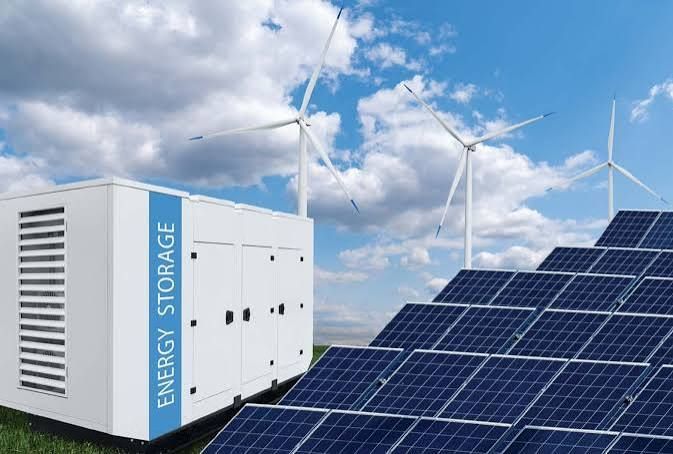
Solar energy can be a smart way to generate electricity for your home or business. However, solar panels only produce energy when sunlight is available. This means you may still need electricity from the grid during the evening or when solar production is low. Battery storage provides a way to store energy for later use. A Deye inverter and battery storage system can work with solar panels to manage energy production, storage, and household or business consumption. Deye offers residential hybrid inverter and energy storage solutions designed for different system sizes and applications. For property owners looking for Deye Inverter & Battery Storage in Greater Victoria , GES Energy can help with system design, product selection, and professional installation. The right solution depends on your electricity usage, existing solar system, property requirements, and energy goals. What Is a Deye Hybrid Inverter? A hybrid inverter is an important part of a solar and battery storage system. It helps manage electricity from your solar panels, battery, home, and the grid. This allows energy to be used where it is needed and stored when appropriate. Deye offers a range of residential hybrid inverters for different applications. Its Australian residential range includes single-phase and three-phase models with different power capacities and battery configurations. This flexibility can make Deye suitable for a range of homes and energy requirements. However, the correct inverter should always be selected based on the property's electrical system and expected energy demand. How Does Deye Battery Storage Work? The process is straightforward. During the day, your solar panels generate electricity. Your home or business can use that electricity immediately. If your solar system produces more energy than you need at that time, compatible battery storage can store some of the excess energy. You can then use the stored energy later. This can be particularly useful when solar production falls in the evening or during periods when your electricity demand is higher. Deye's current home energy storage systems combine battery storage, hybrid inverter technology, and energy management features. Some Deye systems are also designed to provide backup power to connected loads during a grid outage. Why Consider Battery Storage in Greater Victoria? Energy consumption does not always match solar production. Your solar panels may generate their highest output during the middle of the day, while your household may use more electricity in the morning and evening. Battery storage can help close this gap. Instead of using all your solar electricity immediately or exporting excess energy, you can store some of it and use it later. GES Energy explains that solar batteries can store solar energy for later use and help property owners make greater use of their solar generation. The company provides battery storage design and installation services across Victoria. Store More of Your Solar Energy One of the main reasons people consider battery storage is to make better use of their solar power. A solar system can produce more electricity than your property needs at certain times of the day. A compatible battery can store some of that excess energy. You can then use the stored energy when your solar panels are producing less electricity. This can create a more flexible energy system. Instead of relying only on the timing of solar production, you have the option to use stored energy when it suits your needs. Battery Storage for Backup Power Power outages can interrupt important household and business activities. Depending on the system design, a battery storage system can provide backup power to selected loads when the grid goes down. Deye's current residential energy storage range includes systems with backup support for connected loads. The amount of power available during an outage depends on the selected equipment, battery capacity, electrical configuration, and the loads connected to the backup system. For this reason, backup requirements should be discussed during the design stage. You may want to keep essential lighting, refrigeration, communications, or other important equipment operating during an outage. Deye Inverter and Battery Storage for Existing Solar Systems You do not necessarily need to install a completely new solar system to consider battery storage. In some situations, battery storage can be added to an existing solar installation. However, compatibility must be checked first. Your existing inverter, solar array, electrical system, and proposed battery need to work together correctly. A professional assessment can identify the most suitable approach. GES Energy provides solar battery solutions for Victorian homes and businesses and can assess your existing energy setup before recommending a storage solution. Choosing the Right Battery Size Battery capacity is normally measured in kilowatt-hours, or kWh. The capacity you need depends on how much electricity your property uses and how you want to use the battery. A household that mainly wants to store excess solar energy may have different requirements from a household that wants significant backup capacity. Businesses can also have different requirements because their electricity demand may be higher or concentrated at particular times. Deye offers scalable storage solutions. For example, its current All-In-One Home ESS range can be configured with different inverter power levels and expandable battery capacity. The right size should be determined from your actual energy usage rather than simply choosing the largest available battery. Deye Battery Storage for Homes Every home has a different electricity profile. Some homes use most of their electricity during the day, while others have higher demand in the evening. A battery can help shift stored solar energy to the times when it is needed. This can make your solar system more useful throughout the day. For homeowners in Greater Victoria, a professional energy assessment can help determine whether battery storage is suitable and what system configuration may work best. Deye Battery Storage for Businesses Businesses can also benefit from energy storage. Commercial properties often have larger electricity loads and may use significant amounts of energy during operating hours. Battery storage can provide another way to manage energy generated by a commercial solar system. Depending on the system design, stored energy can be used when required, while smart energy management can help coordinate solar generation, battery charging, and electricity consumption. Deye also provides energy storage solutions for commercial and industrial applications, with different system configurations available for different energy requirements. Smart Energy Management Modern battery systems do more than simply store electricity. Energy management is an important part of understanding how your solar and battery system operates. Deye's current residential energy storage systems include energy management and monitoring features. Depending on the selected system, users can monitor energy production, consumption, battery status, and other system information. Monitoring can help you understand how much energy your solar panels are producing and how your battery is being used. This information can also help you make better decisions about your household energy consumption. Why Professional Installation Matters Battery storage is a significant electrical installation. It needs to be designed and installed correctly for safe and reliable operation. Energy Safe Victoria notes that battery energy storage systems have important safety requirements and that installations should meet applicable regulations and standards. It also highlights the need to assess switchboards when adding battery systems or other supplementary supplies. Professional installation is therefore an important part of the process. A qualified installer can assess the property, review the electrical system, determine suitable equipment, and configure the system according to the installation requirements. Why Choose GES Energy? Choosing the right battery is only one part of a successful energy storage project. The design and installation are equally important. GES Energy provides solar battery design and installation services for residential and commercial customers across Victoria. The company states that its Victorian battery installers are accredited by Solar Accreditation Australia and that it provides a five-year workmanship guarantee on its solar power projects. GES Energy can help you understand your available options and determine whether a Deye inverter and battery system is appropriate for your property. A Complete Approach to Solar and Battery Storage A good energy storage system should be designed around your property. Your electricity consumption, solar generation, backup requirements, available space, and future energy needs should all be considered. Deye offers different inverter and battery configurations, including single-phase and three-phase options. This allows the system to be selected according to the property's requirements rather than using one standard solution for every customer. GES Energy can assess these factors before recommending a system. This helps ensure that the inverter and battery are appropriate for your existing or planned solar installation. Is Deye Inverter & Battery Storage Right for You? Deye inverter and battery storage may be worth considering if you already have solar panels or are planning a new solar system. It can also be an option if you want to store excess solar energy, increase your use of stored energy, or explore backup power. However, the best system depends on your property. Your electricity consumption and solar generation should be reviewed before selecting equipment. A professional assessment can help you understand the available options and avoid choosing a system that does not match your actual requirements. Get Deye Inverter & Battery Storage in Greater Victoria If you are considering Deye Inverter & Battery Storage in Greater Victoria , GES Energy can help you explore your options. From system design and equipment selection to installation, professional guidance can make the process easier and more straightforward. Battery storage can help you use solar energy beyond the hours when your panels are producing electricity. With the right inverter, battery, and system design, your property can have a more flexible approach to energy management. GES Energy provides solar and battery storage solutions across Victoria. Contact the team to discuss your energy requirements and find out whether a Deye inverter and battery storage system is suitable for your home or business. Frequently Asked Questions
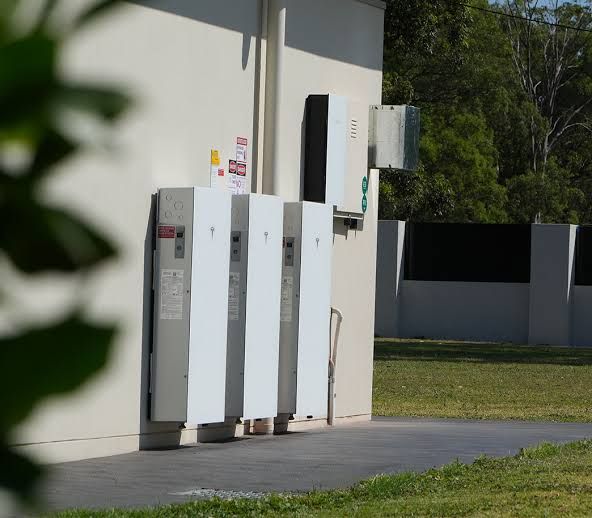
In 2026, a NSW home can cut roughly 30% off a new battery through the federal Cheaper Home Batteries Program, then earn an extra NSW payment by joining a virtual power plant. Businesses now get even more: since 1 September 2026, a new NSW business battery discount can be combined with the federal one. NSW battery rebates at a glance There are two main sources of help: the Australian Government's battery discount and the NSW Government's Peak Demand Reduction Scheme. Which ones you can get depends on whether you are a home, an apartment building or a business.
In 2026, a NSW business can combine up to three government incentives on one solar and battery project: the federal solar discount, the federal battery discount and the new NSW business battery discount that started on 1 September 2026. Together they can cover a large share of the project cost, but only when the job is done by the right kind of installer. Commercial solar and battery incentives at a glance A NSW business can stack federal and NSW incentives on the same project. Each is claimed through your installer as a discount on the quote.